
How Divorce Impacts Kids: What the Research Says

If you’re considering divorce and you have children, you want to know one thing: will my kids be okay? The honest answer is that divorce does affect children, but the outcome depends largely on how you and your co-parent handle it. Research shows that kids can adjust well and thrive after divorce when parents prioritize their emotional needs, maintain stability, and minimize conflict.
At RM Law Group, LLP, our Irvine divorce lawyers understand that divorce affects everyone in the family. That’s why we work to protect you and your children throughout the entire divorce process. We can also direct you to resources that will help you support your kids through this big life change. Call us at 949-561-1520.
Divorce Affects Kids Differently Than You Might Think
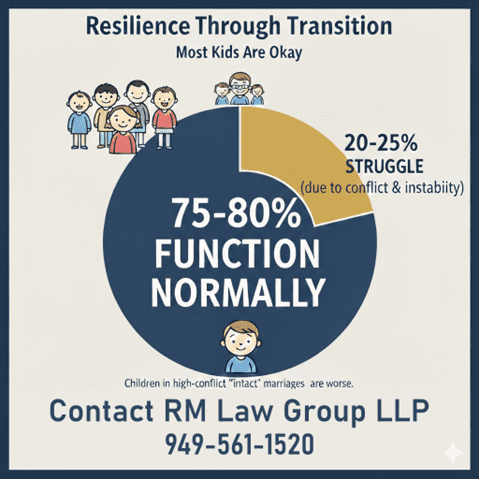
Most parents assume divorce will automatically damage their children. The research tells a more complex story. According to long-term studies from psychologist E. Mavis Hetherington, who followed 1,400 families for three decades, approximately 75-80% of children from divorced families function within normal ranges and don’t show lasting psychological problems.
The remaining 20-25% do experience significant difficulties, but the problems typically stem from ongoing parental conflict and instability rather than the divorce itself. In fact, children in high-conflict intact marriages often show worse outcomes than children whose parents divorced and reduced the conflict.
What Hurts Kids Most
The divorce itself isn’t the main problem. Research consistently points to three factors that predict poor outcomes for children:
- Ongoing parental conflict. When parents continue fighting after separation, especially in front of children or using kids as messengers, children experience chronic stress. A landmark study in the Journal of Family Psychology found that children exposed to frequent post-divorce conflict showed higher rates of anxiety, depression, and behavioral problems than children whose parents divorced amicably.
- Loss of relationship with one parent. Children who maintain strong, consistent relationships with both parents after divorce generally adjust better. When one parent disappears or becomes inconsistent, children often blame themselves and struggle with abandonment issues that can last into adulthood.
- Economic instability and multiple transitions. Moving frequently, changing schools, or experiencing significant drops in living standards creates additional stress. Orange County’s high cost of living makes this particularly relevant for local families. Children need predictability and routine to feel secure during major life changes.
How Kids at Different Stages Respond
Children process divorce differently depending on their developmental stage. Here’s what research shows:
- Young children (ages 2-5) often regress in behaviors they’d already mastered. They might return to bedwetting, become clingy, or have trouble sleeping.
- School-age children (ages 6-12) understand more but often harbor fantasies about their parents reuniting. They may feel caught in the middle and experience divided loyalties.
- Teenagers (ages 13-18) grasp the finality of divorce but may feel anger, worry about their own future relationships, or take on inappropriate adult responsibilities. Studies show teens need parents to stay parents, not treat them as confidants or therapists.
What’s ONE Thing You Can Do To Help Your Children Through Divorce
If you take away one thing from the research, make it this: reducing parental conflict is the most powerful thing you can do to protect your children during divorce. A comprehensive study published in Child Development tracked children for 20 years and found that low-conflict divorces produced better long-term outcomes than high-conflict intact marriages.
What does this mean practically?
- Stop fighting in front of your kids.
- Don’t badmouth your co-parent.
- Don’t interrogate children about the other parent’s life
- Don’t use them to pass messages
When parents can communicate civilly about parenting decisions and keep adult issues away from children, kids adjust remarkably well. This matters especially in Orange County, where you’ll likely continue running into your ex at school events, sports games, and around town. Geography forces some level of co-parenting cooperation here.
What Actually Helps Kids Adjust
Beyond reducing conflict, research identifies several factors that support children’s adjustment:
- Maintaining routines. This gives children a sense of normalcy and security. Keep bedtimes, mealtimes, and other daily rhythms as consistent as possible between both homes. Predictability reduces anxiety.
- Quality time with both parents. In reality, quality time matters more than equal time. Children benefit when both parents stay actively involved in their lives. This means showing up for school events, knowing their friends’ names, helping with homework, and staying connected to their daily experiences.
- Attend therapy. Therapy can help, but not always in the way parents expect. Research shows that therapy is most beneficial for children showing clear signs of distress, not as a blanket intervention for all children of divorce. The best predictor of whether children need professional help is whether they’re showing changes in behavior, sleep, eating, school performance, or social relationships.
Contact Our Irvine Divorce Lawyers Today
Children are resilient, but they need adults to protect that resilience. They need parents who can put aside their own pain and anger long enough to co-parent effectively. They need consistency, love, and reassurance that the divorce isn’t their fault.
An Irvine family law attorney at RM Law Group, LLP can help you understand options such as custody arrangements, parenting plans, and dispute-resolution methods, all while strongly fighting for your child’s needs.
Your kids can be okay. The research is clear on this. But whether they thrive or struggle depends largely on the choices you make right now about how to handle this transition. Call RM Law Group, LLP at 949-561-1520 for a confidential consultation or fill out our contact form. We serve families throughout Irvine and Orange County. You can reach us at our Irvine office (2030 Main St, Suite 225, Irvine, California 92614, United States).


Jason Martinez is a co-founding partner of RM Law Group, LLP. His practice focuses exclusively on California Family Law and community property division, including litigation and settlement of complex and high-conflict divorce and child custody proceedings. Jason understands that divorce and family law issues have long-term effects on all family members, especially the children.

